- Introduction and Acknowledgements (this page)
- Executive Summary
- Research Recommendations
- Research Methodology
Research Findings:
Introduction and Acknowledgements
Introduction
The benefits of social interactions may seem like a simple concept to grasp; however, human relationships are complex and can be difficult to interpret. The reason for this pilot study stemmed from a connection to an Australian research report focused on understanding the social role and value of Australian livestock sale yards. Two research areas of particular interest were 1) uncovering the social contributions of a traditional, and often overlooked, rural economic business, such as livestock sale barns (Ellis, 2022), and 2) the potential to move beyond the acknowledgement and importance of social capital to a more defined value (Measuring Social Value, n.d.).
Study Design
To allow for comparison with the Australian study, Nebraska researchers replicated many aspects of their research. However, some components of the research study needed to be modified to accommodate U.S. culture and specific Nebraska conditions. The University of Nebraska research team closely collaborated with the Australian researcher, who readily shared the initial tools and study methods. The study gathered information using: 1) a 15-question survey that was distributed at pilot sale barns to producers, buyers, and sale barn workers; individuals volunteered to complete the survey. 2) in-depth interviews with study participants who had completed the survey were conducted through video and phone conferencing at a later date; and 3) sale barn observations, in and outside of the sale ring which occurred on the same day as when participants completed the survey. Data from the mixed-method research study revealed insights into the Nebraska sale barn experience. More information on research methodology is available at cap.unl.edu/salebarns/methodology.
Research Aims
The key research aims for exploring the social value of Nebraska sale barns were to gain:
- Greater knowledge of the social role and value of Nebraska sale barns.
- Increase understanding of how social connections contribute to individual and community resiliency and well-being.
- Enhance awareness of how social interactions influence business decision-making.
- Greater understanding of potential educational and service opportunities that leverage social connections within the sale barn environment.
Study Limitations
As a pilot study, the primary limitation was the small number of sale barn facilities used in the study. The four Nebraska locations were purposefully selected for their specific attributes, representing different geographic locations, sales volume, and customer bases. The demographics of research participants reflected the demographics of the farm and ranching professions who were present during the onsite research study. There was no attempt to randomly choose participants, which limits the generalization of the study.
Study Participants
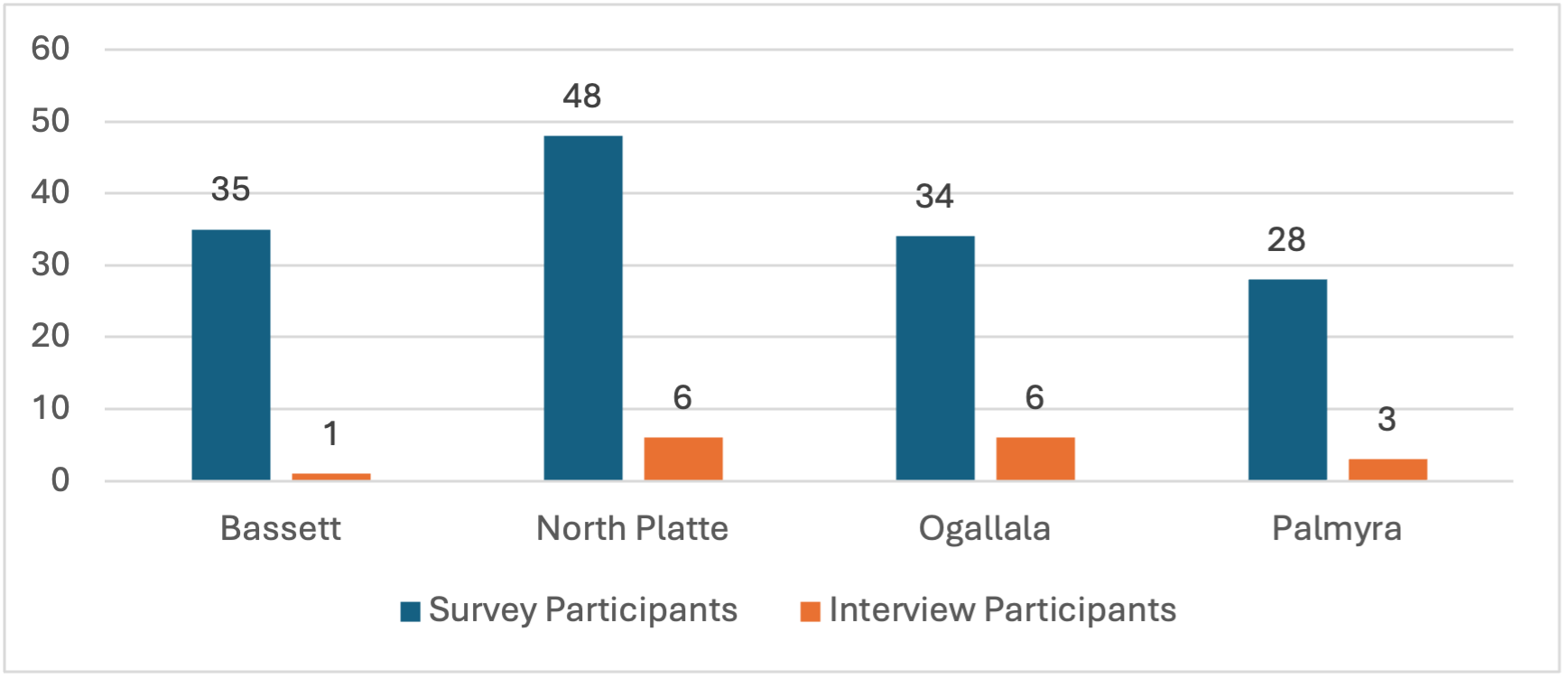
Observations were conducted at four livestock sale barns during September and October 2024. Three sale barn locations offer a traditional mix of livestock, with the primary focus on cattle. One barn, located near a metropolitan city, specializes in small animal and personal property sales. The paper-pencil survey was conducted at the sale barns, which took approximately 10 to 15 minutes to complete. One hundred forty-five individuals completed the survey and were given a thankyou gift for their time. Of the participants who completed the study, 16 were later interviewed via video conference or telephone and were provided with a $40 thank-you gift certificate. Figure 1 shows which sale barn location the survey and interview participants attended during the on-site research study.
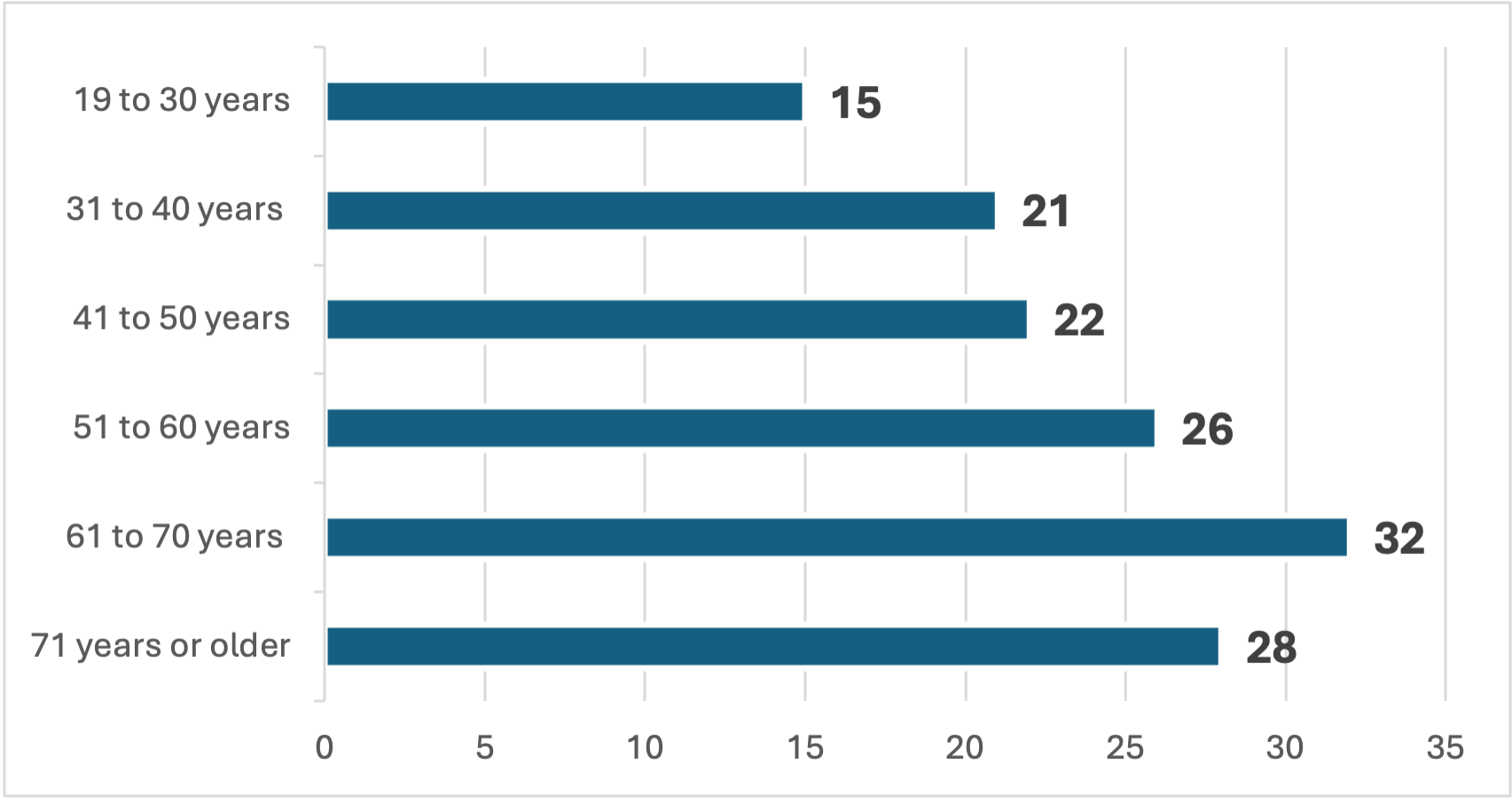
Of the individuals who participated in the survey, (Fig. 2) 32 individuals were between the ages of 61 and 70 years, followed by 71 years or older (28) and 51 to 60 years of age (26). The least number of participants were from 19 to 30 years of age. Individuals under the age of 19 were not eligible to participate in the study. Sixty-one percent of the sale barn attendees who participated in the survey were male, and 39 percent were female. The individuals interviewed were predominantly males (14) compared to females (2). In the interviews, individuals were not asked their ages.
Survey participants (Fig. 3) were asked to identify the multiple roles they have within the livestock sale barn environment. The largest group identified was ranchers, with 68 percent, followed by farmers and buyers, each at 17 percent. Of the interview group, 14 individuals identified as livestock sellers, 11 as livestock buyers, and four as employees. Like the survey participants, many indicated that they had dual roles at the sale barn, operating both as buyers and sellers of livestock.
Figure 1: Number of Survey and Interview Participants by Location
Of the individuals who participated in the survey, 32 individuals were between the ages of 61 and 70 years, followed by 71 years or older (28) and 51 to 60 years of age (26). The least number of participants were from 19 to 30 years of age. Individuals under the age of 19 were not eligible to participate in the study. Sixty-one percent of the sale barn attendees who participated in the survey were male, and 39 percent were female. The individuals interviewed were predominantly males (14) compared to females (2). In the interviews, individuals were not asked their ages.
Figure 2: Survey Participants by Age
N=145
Survey participants were asked to identify the multiple roles they have within the livestock sale barn environment. The largest group identified was ranchers, with a total of 98, followed by farmers and buyers, each totaling 24. Of the interview group, individuals again served multiple roles, with 14 identified as livestock sellers, 11 as livestock buyers, and four as employees. Like the survey participants, many indicated that they had dual roles at the sale barn, operating both as buyers and sellers of livestock.
Figure 3: Roles within the Sale Barn Environment
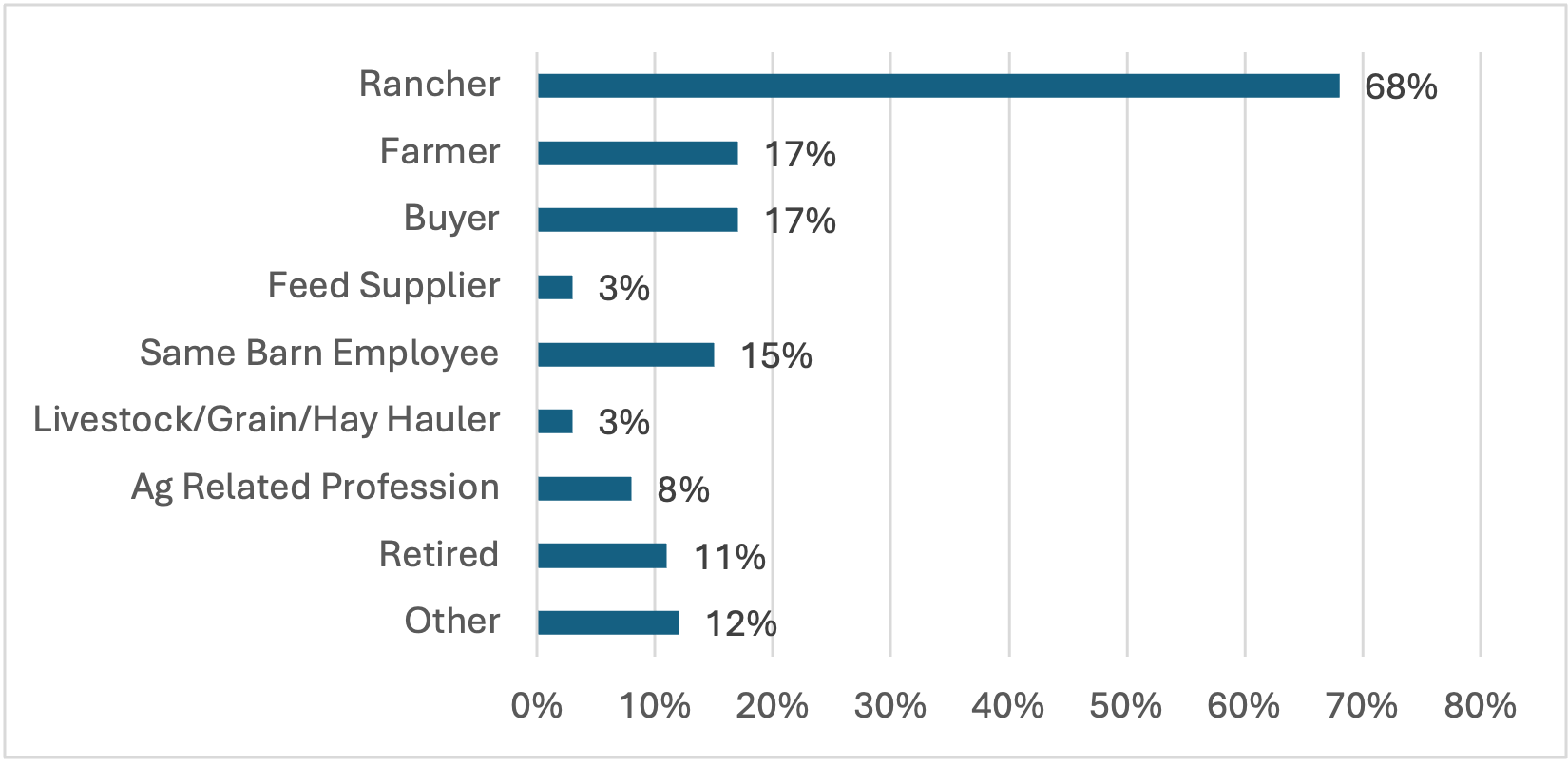
Other responses included: government, veterinarian, homesteader, media, and various other occupations. N=145.
Survey participants were asked: Which of these titles do you identify with (select all that apply).
Sale Barn Locations
The four pilot sale barns are located in three regions of the state: northeast, southeast, and west central Nebraska.
Bassett, NE
The Bassett Livestock Auction has a history dating back to the early 1930s. It began with the Kelly family’s arrival in 1931, when they established one of the first sales in northcentral Nebraska and constructed a barn for livestock auctions. The first strictly livestock sale was held in October 1931. The auction has since become a prominent location for cattle sales in the region. Today, Bassett Livestock Auction is owned and operated by Jake Maurer and Shane Kaczor. Sales are held on Wednesdays, and they are currently selling 130,000-140,000 head of cattle annually.
North Platte, NE
The North Platte Stockyards has a rich history as a central hub for cattle and horse trading in the region. It has experienced periods of immense success, including setting national and state records for feeder calf sales, while also facing closures and changes in ownership. Currently, Jay Nordhausen and Lance Van Winkle own and operate the business. The Stockyards has traditionally been a place where ranchers and farmers could primarily buy and sell cattle. The sale barn remains a vital part of the local economy and community, hosting weekly cattle sales and monthly sales of sheep, goats, pigs, and horses. The sale barn’s history dates to the 1950s.
Ogallala, NE
The Ogallala Livestock Auction Market dates back to 1935, with its current location established in 1951. It is known as the largest livestock market in Nebraska and is a significant economic driver for the area. The Ogallala Livestock Auction Market handles a substantial volume of cattle, selling approximately 150,000 head annually. They have even held sales with over 11,000 head, requiring careful coordination to manage the influx of livestock. Despite the rise in video sales, the current management, particularly Jay Nordhausen, emphasizes the importance of live auctions, citing the social and communal aspects of the livestock business. Jay Nordhausen and Lance Van Winkle own and operate the Ogallala Livestock Auction Market.
Palmyra, NE
The Palmyra Livestock Market was built and owned by Dale and Becky Steinhoff in 1980, then known as Southeast Nebraska Livestock Market. Purchased in 2011 by their son Brad and Emily Steinhoff, the name was changed to Palmyra Livestock Market. The sale barn specializes in twice-monthly Saturday sheep and goat auctions, hogs and cattle sales, and a monthly horse sale. Weekly Saturday auctions feature a variety of items, including hay, produce, plants, caged poultry and rabbits, as well as personal property. Auctions are streamed live on YouTube (no online bidding) with early consignments posted on Facebook.
Study Definitions
Social Capital
Social capital is often referred to as one of the basic components of community, economic, and social well-being. It supports the concept that “relationships matter”. Generally defined, social capital reflects the connections between people and organizations. Social capital is often broken down into three categories: 1) bonding capital – the close connections between family and friends that develops community cohesion; 2) bridging capital – which indicates loose connection between individuals of different classes or races usually shown through community groups and organizations; and 3) linking capital – indicating connections between community members with outside resources or institutions (Aldrich and Meyer, 2015).
Intuitively, one can recognize that these relationships are important, but often there is a desire to understand them in even more detail. For instance, it may be helpful to examine how social capital evolves and how it can be strengthened to benefit both the individual and the community. There is also research interest in measuring and assigning value to social capital to quantify the personal, organizational, or community benefits it provides.
Social Value
According to Social Value International, social value is “about understanding the relative importance of changes that people experience and using the insights we gained from this understanding to make better decisions.” (Social Value International, n.d.). Social value is often referred to as the non-financial impacts made through stakeholder interactions and programs that create both intended and unintended, positive and negative changes. These changes create outcomes that can be measured. However, the difficulty lies in quantifying these changes into measurable economic terms. Researchers, especially in countries affiliated with the United Kingdom, are actively working to explore ways to measure social value. (Measuring Social Value, n.d.).
In the context of this report, researchers define Social Value as the broader impact an activity, organization, or service has on individual and community well-being. This encompasses relationships and connections among individuals, support networks, shared knowledge, and enhancements in people’s lives.
Proposed Model of the Social and Economic Value of Nebraska Sale Barns
Research analysis of the data collected through surveys, interviews, and observations provided insights into the social relationships that occur during the livestock sale barn experience. Key concepts emerged that highlight the social interplay between individuals, businesses, and the community. To organize the data, the University researchers developed a graphic to illustrate these key concepts (page 11).
As part of the primary sale barn experience, individuals encounter and create a distinct culture for each location; social relationships enhance personal well-being; and conversations and interactions bolster individual knowledge and confidence. Subsequently, the sale barn experience extends beyond the location. It influences the on-ranch/farm daily decision-making, opens doors to new business opportunities, and provides economic benefits to the local sale barn community.
Figure 4: Graphic Depiction of the Sale Barn Experience
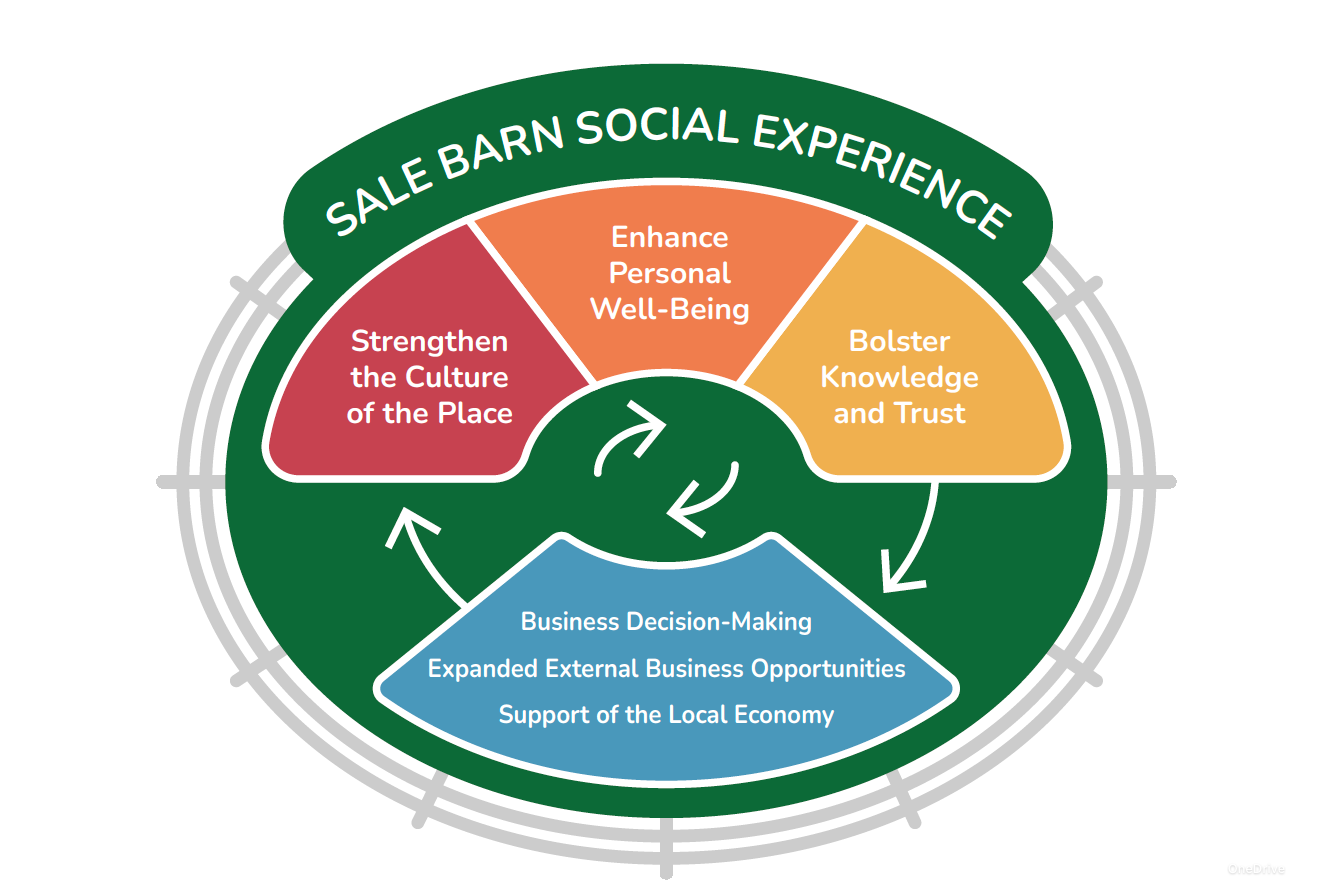
This research study aimed to assess the social value of the Livestock Sale Barn Experience. Findings are described as components of the social interaction that occurs within and outside of the sale barn environment:
Strengthen the Culture of Place – Individuals and history contribute to the unique characteristics of a sale barn.
Enhance Personal Well-being – Individual relationships positively impact personal mental health through affirmation and recognition.
Bolster Knowledge and Confidence – Informal conversations foster a shared knowledge base, building confidence in both marketing and operations.
Subsequently, positive social interactions and relationships flow beyond the sale barn environment, influencing other aspects of the livestock industry.
Business Decision-Making – Knowledge gained at the sale barn influences the daily decisions on the ranch or farm.
Expanded External Business Opportunities – Sale barn interactions provide valuable network contacts and referrals that open doors to new business opportunities for both producers and buyers.
Support of the Local Economy - The sale barn and its customer base have a positive impact on the local economy as producers and buyers frequent local businesses and financial institutions to conduct their transactions.
In addition to the above themes, three additional subthemes emerged from the surveys and interviews, specifically related to online auctions, resiliency, and respect for others. These are shared here.
Acknowledgements
We acknowledge the time and support of the livestock sale barn owners and managers who assisted with this research project. The research does not reflect their facilities or business but represents those who conduct business at the sale barns. We aim to honor the data provided by the participating individuals for the betterment of understanding the value that facilities like Nebraska livestock sale barns provide to individuals and their communities.
Thank you to the sale barn owners
Bassett Livestock – Shane Kaczor, Jake Mauer, Joe Leonard
North Platte Stockyards, LLC - Jay Nordhausen, Lance Van Winkle
Ogallala Livestock Auction Market - Jay Nordhausen, Lance Van Winkle
Palmyra Livestock Market – Brad Steinhoff, Emily Steinhoff
Special Thank You
We especially thank Heather Ellis, founder of BlueWren Connections, Australia. Her original research work with the Australian Livestock Markets Association provided the foundation for this study. We appreciate Heather’s willingness to share resources and guidance throughout this process.
Research Team
Marilyn Schlake, mschlake1@unl.edu
Cheryl Burkhart-Kriesel, cburkhartkriesel1@unl.edu
Michelle Krehbiel, mkrehbeil2@unl.edu
Randy Saner, randy.saner@unl.edu
Jean Ann Fischer*
(* integral member of the team, died in early spring of 2025)
Thank you to Conner Biehler, Bethany Johnston, Rebecca Vogt, and Amy Timmerman for assisting with the project.
Funding
The Social Value of Nebraska Livestock Sale Barns research study was funded by a North Central Regional Center for Rural Development at Purdue University seed grant program. The program aims to enhance the ability of land grant institutions to positively influence the quality of life in rural areas of the 12 states in the North Central Region. The research has been reviewed and approved by the University of Nebraska-Lincoln Internal Research Board, project ID #20241023862EX.
Nebraska Extension is a Division of the Institute of Agriculture and Natural Resources at the University of Nebraska–Lincoln cooperating with the Counties and the United States Department of Agriculture.
Nebraska Extension educational programs abide with the nondiscrimination policies of the University of Nebraska–Lincoln and the United States Department of Agriculture.
Special assistance was provided by:
Transcription Services: Nebraska Academy for Methodology, Analytics & Psychometrics, UNL.
Design: Mary Thompson – marytomdesign@gmail.com
Portions of language and editing were supported through the use of ChatGPT and Grammarly.
© 2025, The Board of Regents of the University of Nebraska