- Introduction and Acknowledgements
- Executive Summary
- Research Recommendations
- Research Methodology (this page)
Research Findings:
Research Methodology
The original Australian research examined the social value present to both agricultural producers and saleyard employees at selected rural livestock auctions. The findings revealed real-life benefits from the connectedness of informal relationships in these rural, isolated environments. Ranchers indicated learning from other ranchers about the latest practices to add to their operations or, for example, how to manage drought situations (Ellis, 2022). Australian research participants reported that positive relationships with other ranchers and sale yard personnel enabled them to share personal and business-related difficulties, reducing social isolation and supporting their mental and physical health.
The Australian agricultural producers indicated these conversations differed from those they had with friends and neighbors in a pub or café. Sale yards offered a safe, candid atmosphere where farmers and ranchers could share difficult topics (Ellis, 2022).
These Australian findings presented possible insights into similar situations in the United States. The Nebraska social interaction research identified economic benefits from the knowledge gained while at the sale barn. In addition, several participants alluded to positive social benefits for physical and mental health, but further exploration is needed to develop a clearer picture of how this social interaction impacts these aspects. Although mentioned by a few of the study participants, the physical and mental health aspects are of particular interest due to some staggering facts: (1) the U.S. Centers for Disease Control and Prevention (2022) reports suicide rates among people living in rural areas are 64% to 68% higher compared to people living in large urban areas; and (2) declining social connections resulting in social isolation and loneliness are factors of premature death and poor health (General, 2023).
While attending the World Conference for Community Development, Nebraska researchers explored the Nebraska research concept with Heather Ellis, founder of Blue Wren Connections of Australia. Ellis served as a consultant to the Nebraska research project and shared her research protocols. These were adapted for Nebraska’s culture and economic environment.
The research project was funded by a North Central Regional Center for Rural Development at Purdue University seed grant program. All research processes were conducted in compliance with the University of Nebraska Institutional Review Board, #20241023862EX.
Research Protocols
The project team identified and secured permission to conduct research at four unique Nebraska livestock sale barn locations. The team worked with three rural sale barns—one in the North Central region, two in the western region—and one sale barn located adjacent to a metropolitan area to explore possible differences between rural sale barns and an urban-adjacent sale barn.
The project team used a mixed-methods research protocol. With permission, the team modified the Australian research tools to fit Nebraska livestock culture and integrated constructs for determining social value, individual well-being including feelings of loneliness and isolation, and sense of belonging.
The study included:
- Survey. An on-site brief survey of sale barn attendees was conducted by team members. Individuals who completed the survey were provided with a small $10 thank-you item.
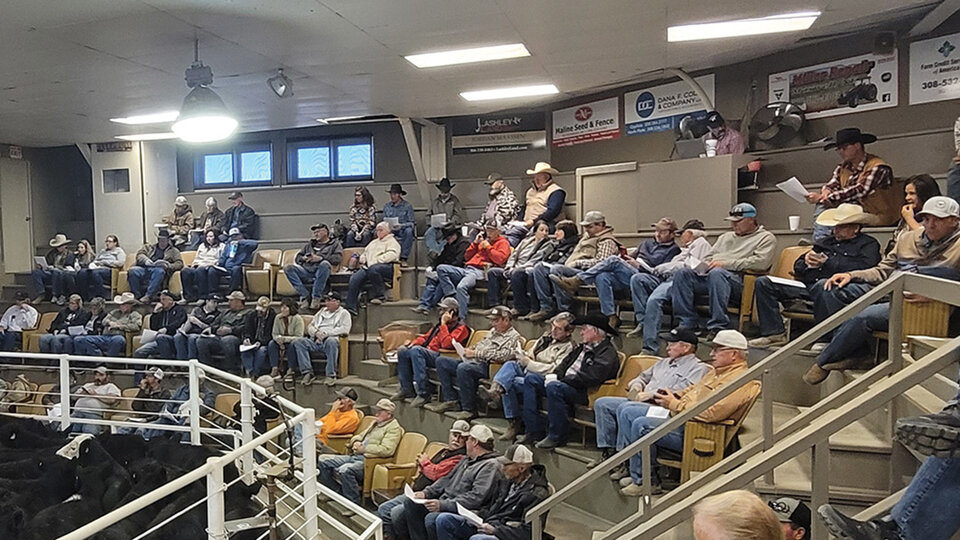
- Observations. Team members conducted observations of social interaction in the sale ring, café, and open areas where individuals gathered. A standardized observation chart was developed for researcher consistency. Observations were conducted each hour for twenty minutes, before and during the livestock sale.
- Interviews. Individuals who completed the on-site survey were invited to participate in an in-depth interview via Zoom later. Individuals were contacted to confirm interest and schedule interview times. Interviews were conducted in November 2024 and February 2025. Individuals who completed the interviews were provided with a $40 gift card.
Initial analysis of the first seven interviews was provided by the University of Nebraska Academy for Methodology, Analytics & Psychometrics. The additional nine interview transcripts were analyzed by the research team utilizing MAXQDA software, which served as the basis for the final research report.
Survey Questions
- What is your age?
- What state do you live in?
- Which of these titles do you identify with? (Circle all that apply.)
- A. Farmer
- B. Rancher
- C. Buyer
- D. Feed supplier
- E. Sale barn employee
- F. Livestock/grain/hay hauler
- G. Veterinarian
- H. Ag-related profession (ag lender; ag sales: feed, supply, equipment)
- I. Government
- J. Retired
- K. Other (please specify)
- Besides this location, what other livestock sale barns do you attend? List the community locations.
- On average, how far do you travel to attend a sale barn auction?
- How often do you attend a sale barn livestock or hay sale?
- Do you attend any online livestock auctions? Why or why not?
- Besides buying and selling livestock or hay, for what other reasons do you attend livestock auctions? (Select all that apply.)
- A. Socializing (relationships, support for each other)
- B. Gain new industry information
- C. Market research (pricing, cattle weights, genetics)
- D. Supporting a local business
- E. Business opportunities
- F. Networking
- G. Looking for work
- H. Conduct other business in surrounding community (medical, farm-related, personal, retail)
- I. Other (please specify)
- This is a two-part question. First, circle the letter for services or informational sources you have accessed at livestock sale barns in the last five years. Then circle Yes or No if you would like the service available in the future.
- A. Financial services — Yes / No
- B. Educational programs (University/Extension) — Yes / No
- C. Industry services/education (private vendors) — Yes / No
- D. Health services (awareness, clinicians) — Yes / No
- E. Employment opportunities (job recruiters) — Yes / No
- F. None of these — Yes / No
- G. Other (specify) — Yes / No
- As a regular attendee, how has the livestock sale barn community helped you? (Select all that apply.)
- A. Provided new business opportunities
- B. Gained new friendships
- C. Provided a social place to gather
- D. Supported me when I needed business help due to disaster, drought, or financial issues
- E. Supported me when I needed personal help due to injury, death of family member, mental health
- F. No help provided
- G. Other (specify)
- If you previously attended a now-closed sale barn location, have you noticed any changes to the community since the sale barn closed? (Select all that apply.)
- A. Loss of other businesses
- B. Loss of a place for people to connect
- C. Loss of a restaurant or place to eat
- D. Loss of community identity
- E. No changes
- F. Other (specify)
- G. I do not know
- What gender do you identify as?
- What is your racial identity?
- What is your ethnicity?
- Can we contact you for a follow-up one-on-one in-depth interview?
Follow-Up Individual Interview Questions
- What is your role when you attend livestock auctions?
- Why are livestock auctions and sale barns important to you?
- What do you gain by attending a livestock auction in person?
- Describe what you do at the sale barn when you are not buying or selling livestock.
- Tell me a story about one of the best days you’ve had at the sale barn, or tell me what makes a good day at the sale barn.
- Besides attending the livestock auction, what other activities or businesses do you engage in when you travel to attend one?
- How does attending a livestock auction impact your personal health and well-being?
- Anything else you would like to share?