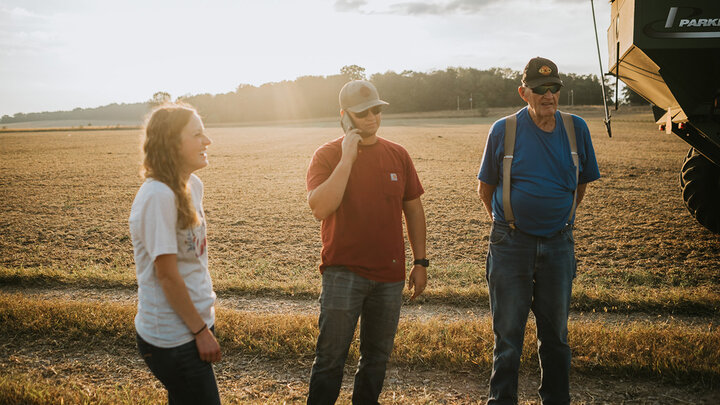
Cory Walters and Jessica Groskopf discuss how county-level crop insurance programs like SCO and ECO work and what Nebraska producers should consider ahead of the March 15 deadline. (FInd this episode on your favorite platform here).
With the March 15 crop insurance deadline approaching, many Nebraska producers are finalizing decisions about their coverage for the 2026 growing season. One question that continues to come up is whether county-level options like the Supplemental Coverage Option (SCO) or Enhanced Coverage Option (ECO) make sense alongside a producer’s existing policy.
In a recent episode of Nebraska FARMcast, the University of Nebraska–Lincoln's Cory Walters (associate professor, Agricultural Economics) and Jessica Groskopf (extension agricultural economist) discussed how these programs work and what producers should think about when evaluating them. Unlike traditional multi-peril crop insurance, which is based on losses on an individual farm, SCO and ECO trigger payments based on county or area yields.
That distinction can be important. Walters explained that farm yields and county averages don’t always move together. A producer could see a yield loss from hail or another localized event while the county as a whole performs well, meaning the area-based policy would not trigger a payment. At the same time, there may be years when county yields decline even though an individual farm has a strong crop.
Walters and Groskopf also discussed how the geographic area used to determine those yields can vary depending on the crop and location. In some cases, the insured area may be a single county, but for certain crops or parts of Nebraska it can include multiple counties, which changes how the policy functions. Because of that, they encouraged producers to work closely with their crop insurance agents to understand exactly what area is being used to determine the yield and how those numbers relate to their own operation.
Listen to the full episode above.
Webinar Recording
For a more in-depth look at the topic, view the Jan. 29 webinar presented by Walters, “County-Level Crop Insurance in Nebraska: SCO and ECO Decisions for 2026.”